Posts

LINKING EASTER TO THE WORSHIP OF THE BABYLONIAN GODDESS ISHTAR BASED ON NAIVE WORD-ORIGIN FALLACY
Image
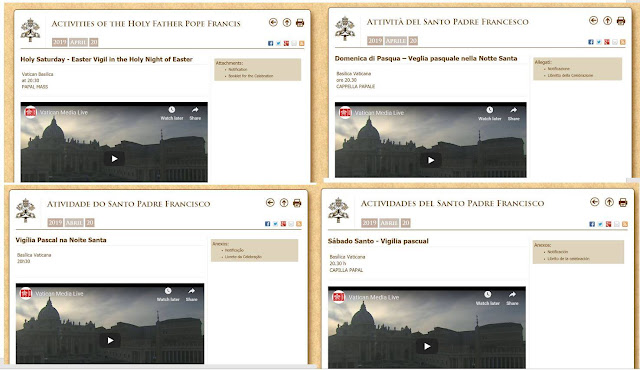
Every year someone attempts to claim that Easter is a pagan festival derived from the worship of the Babylonian Goddess Ishtar. Very often the origin is said to derive form the idea that Roman Catholicism is a thinly veiled version of the old Babylonian mystery religion. The idea is an example of a very naive word-origin fallacy. The ancient name of Easter in the Greek and Latin Churches was not Easter but Pascha. This can still be seen in modern languages, all one has to do is check out the various translations of the today's news (Holy Saturday 2019) items on the Vatican website talking about Easter. Here for example is a picture of an item on tonight's Easter Vigil in English, Italian, Portuguese, and Spanish (top to bottom left to right), and in French (separate picture). Notice that apart from English, the name for Easter derives from the ancient Latin name.
ATHEIST DAN BARKER FOLLOWS IN MYTHICIST TRADITION OF PRETENDING TO KNOW ABOUT PHILO OF ALEXANDRIA

Image
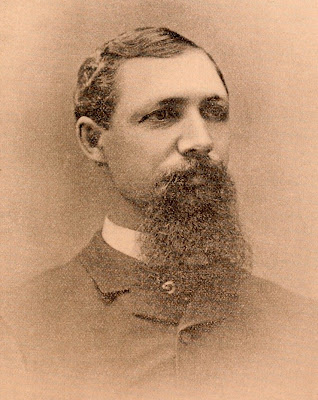
John E. Remsburg (d.1919) Mythicists often make statements about books that demonstrate they haven't read them.  In his book  Godless , Dan Barker, Christian music man turned Atheist, repeats a passage from another Mythicist about the first-century Jewish writer Philo of Alexandria.  In the process it becomes clear that both he and the author of the quotation lack basic essential knowledge of Philo and his writings:   One of the writers alive during the time of Jesus was Philo-Judaeus (sometimes known as Philo of Alexandria).  John E. Remsburg, in  The Christ , writes: “Philo was born before the beginning of the Christian era, and lived until long after the reputed death of Christ. He wrote an account of the Jews covering the entire time that Christ is said to have existed on earth. He was living in or near Jerusalem when Christ's miraculous birth and the Herodian massacre occurred. He was there when Christ made his triumphal...

Kepler's Argument for Intelligent Design Based on His Wife's Salad

Image
Johannes Kepler  The story of Kepler’s wife’s salad as told by Richard Wurmbrand: “It is said that a scientist, coming home from his laboratory, was called to supper by his wife. A salad was set before him. Being an atheist, he said, “If leaves of lettuce, grains of salt, drops of vinegar and oil, and slices of eggs had been floating about in the air from all eternity, it might at last happen by chance that there would come a salad.”   “Yes,” answered his wife, “but not so nice and well-dressed as mine.” [1] _____ Although Wurmbrand doesn’t say so, the story actually is told by Johannes Kepler, who wasn’t an atheist, [2] as something that actually happened to him.   He tells it his in connection with the sudden appearance of a supernova in the foot of constellation Ophiuchus (Serpent-Handler). Following is an English translation of the Kepler's story followed by the original Latin text from his collected works: “I will tell those disputants, my op...

Poor Eusebius: Always getting called a liar! Dan Barker's Misapplication of a Passage from Burckhardt

Image
The fourth-century Church father, Eusebius of Caesarea, is forever being given a bum-rap, whether it be from King-James-Only fundamentalists on the one side or mythicist, historical-Jesus-denying fundamentalists on the other. [1]   The picture I chose to head this post comes from the former type, [2] but the example I am going to discuss from the latter type, in a book that makes the following claim: Eusebius once wrote that it was a permissible “medicine” for historians to create fictions—prompting historian Jacob Burckhardt to call Eusebius “the first thoroughly dishonest historian of antiquity.” [3] On what authority the author makes this statement is unclear, since he cites no specific reference for either of the two claims.   Perhaps we are expected to accept what he says because he is, as the cover of his book proudly announces, “One of America’s leading Atheists,” a claim, which, if true, doesn’t speak well for the intellectual vigor of current American A...

Origen’s Contra Celsum, Josephus, and the Testimonium Flavianum

Image
The text of Antiquities , written by the first-century Jewish historian Flavius Josephus, contains, as it stands, two references to Jesus. The first and most important, often referred to as the Testimonium Flavianum , appears in Antiquities 18.63 (Whiston: 18.3.3) and is translated as follows in the Loeb Classical Library (LCL) edition: About this time there lived Jesus, a wise man, if indeed one ought to call him a man. For he was one who wrought surprising feats and was a teacher of such people as accept the truth gladly. He won over many Jews and many of the Greeks. He was the Messiah . When Pilate, upon hearing him accused by men of the highest standing amongst us, had condemned him to be crucified, those who had in the first place come to love him did not give up their affection for him. On the third day he appeared to them restored to life, for the prophets of God had prophesied these and countless other marvelous things about him. And the tribe of Christians, so call...